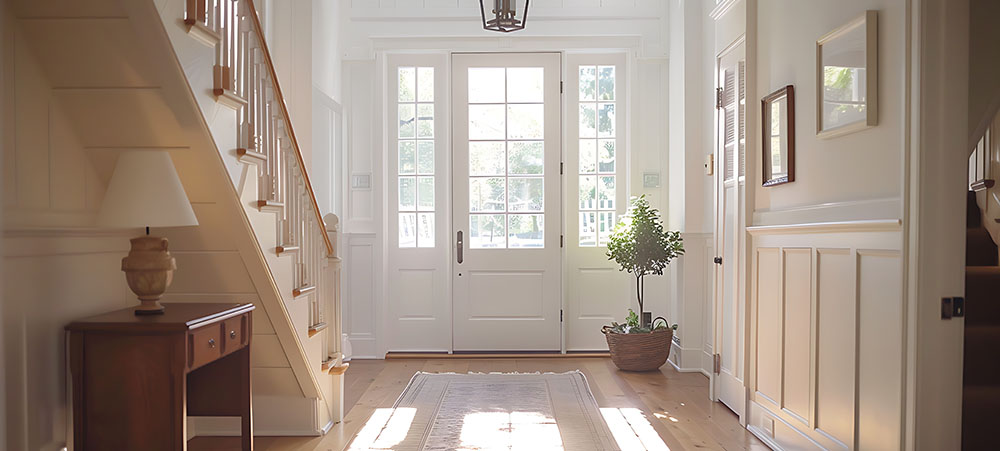
5 Updates That Will Ruin the Character of Your Old Home (and What to Do Instead)
Old homes aren’t just old versions of new houses. They’re a different product entirely—built around different assumptions about comfort, flow, light, privacy, materials, and craftsmanship.
So here’s the (cheerfully) conservative take: if the end goal is a fully modern open-concept interior with brand-new-everything detailing, it’s usually kinder—financially and historically—to buy a home built for that. Old houses shine when you let them be what they are.
This isn’t about freezing your home in amber. It’s about making updates that add comfort and function without erasing the features that made you choose an old house in the first place.
Below are five “character killers” that show up constantly in old-home remodels—plus better options that respect the home and still feel livable.
1) Flattening the floor plan into one big room
Why it hurts character
Many older homes are organized as a sequence of rooms: entry → parlor → dining → kitchen, with clear thresholds and proportions. When you remove multiple walls to create a single “great room,” you often lose:
- the sense of arrival (foyer/hall)
- the rhythm of openings (cased doorways, transoms, pocket doors)
- the proportions that make old interiors feel intentional
It can also create awkward furniture layouts and acoustics—ironically making the space less comfortable day to day.
What to do instead
- Open strategically, not indiscriminately. One widened opening (kept cased and trimmed) often delivers the “air” people want without turning the whole first floor into a cafeteria.
- Use “borrowed light” tricks: glass-paneled doors, interior transoms, widened cased openings, or restoring a blocked doorway (yes, sometimes the house already had better flow—you just can’t see it yet).
- Let public rooms stay rooms. Old houses are great at cozy, purpose-built spaces. That’s a feature, not a bug.
2) Painting or stripping everything to one uniform look
Why it hurts character
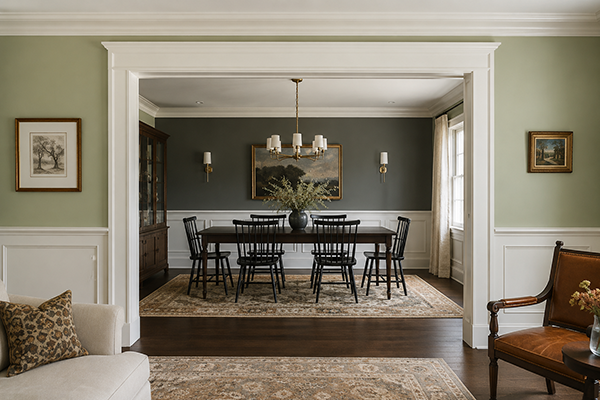
Old interiors rely on contrast: trim against walls, doors with depth, built-ins with presence, and layered materials that tell the home’s story. When everything becomes the same tone—especially if trim, doors, and ceilings are painted identically—details flatten. It can make original millwork read like generic new construction.
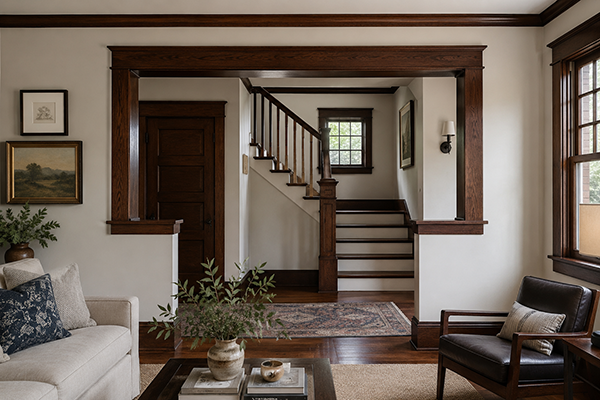
The same goes for aggressively stripping woodwork “because wood equals historic.” Sometimes historic was painted. Sometimes the wood species was never meant to be a showpiece. The goal isn’t “all wood everywhere.” The goal is coherent and period-appropriate character.
What to do instead
- Pick a trim strategy: keep trim lighter/darker than walls, or keep doors a contrasting tone. Contrast = depth.
- If you’re painting: choose a sheen hierarchy (e.g., matte walls + satin trim) so details remain legible.
- If you’re restoring wood: do it selectively—one room, one stair, one built-in—where the wood actually deserves the spotlight.
3) Replacing original proportions with modern “stock” elements
Why it hurts character
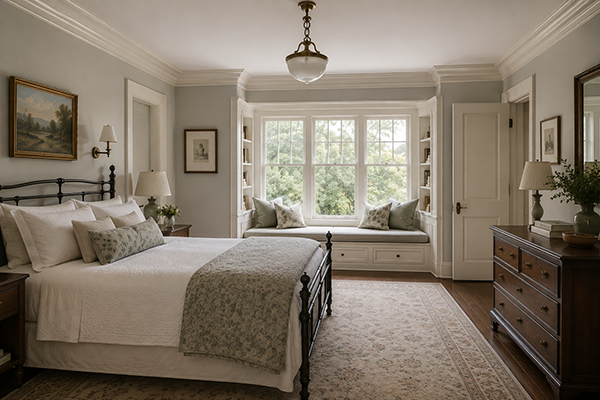
Old houses are full of proportion cues: taller baseboards, narrower casing reveals, solid doors, deeper window stools, thicker plaster walls, and stair parts that have real heft.
When you replace those with modern stock components—thin colonial casing, hollow-core doors, builder-grade railings—the house starts to feel like it’s wearing a costume that doesn’t fit.
This is one of the fastest ways to get the dreaded vibe: “renovated, but somehow cheaper.”
What to do instead
- Repair first whenever possible. Original trim can often be patched, spliced, or replicated more easily than people assume.
- If something must be replaced: match the scale and profiles, not just the general idea.
- Keep (or reintroduce) “weight”: solid doors where feasible, substantial baseboards, and period-appropriate casing proportions.
4) Covering up original materials that need to “breathe”
Why it hurts character (and performance)
Old houses manage moisture differently than new ones. Covering original assemblies with modern impermeable layers can cause hidden problems—especially in basements and masonry situations—and can also erase character at the same time.
Common examples:
- Sealing or coating masonry in ways that trap moisture
- Installing finishes that hide chronic dampness instead of addressing it
- Layering “perfect” surfaces over imperfect historic ones without understanding what’s underneath
Character loss happens when you “sanitize” the building into a flawless box—and the house loses the texture and truth that made it appealing.
What to do instead
- Diagnose moisture first. If there’s water, solve the water. Don’t wallpaper over physics.
- Choose materials and approaches that respect older assemblies (this varies by region and construction type).
- Let patina be okay in the right places. The goal is healthy and stable, not “brand new.”
5) Swapping historic exterior details for “trend updates”
Why it hurts character
Exterior character is often a tight weave of small choices: trim thickness, corner boards, porch details, roofline edges, chimney presence, siding exposure, and yes—sometimes even the slight irregularities that make an old house feel alive.
Trend-driven changes can break that weave quickly:
- removing or oversimplifying trim
- replacing porch elements with unrelated styles
- cladding over details instead of repairing them
- altering the entry sequence so the facade loses its “face”
Even when done with high-end materials, the result can feel like a historic home wearing a modern outfit that clashes with its posture.
What to do instead
- Preserve the big identity markers: porch form, roofline, trim hierarchy, and entry proportions.
- If you want a refresh: update with compatible moves—paint schemes that highlight details, lighting that fits the era, landscaping that frames the house, and repairs that restore crispness.
- When changing anything on the facade, do a quick gut-check: Would this look believable in a photo from 1920? You don’t need perfection—just compatibility.
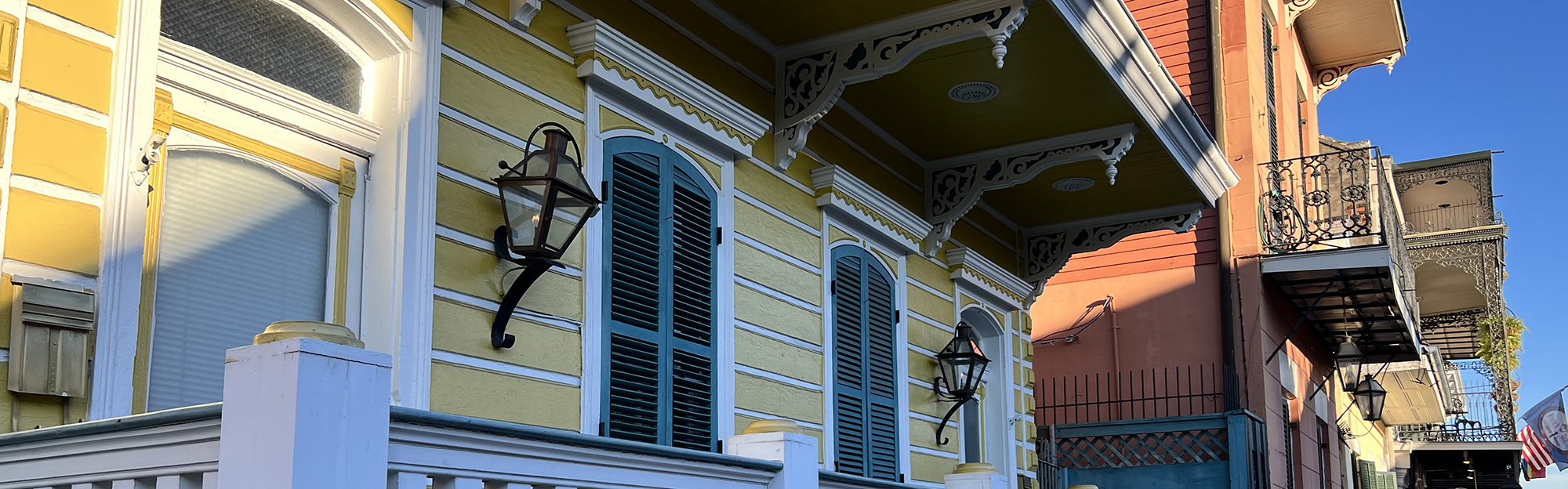
A positive rule of thumb: upgrade the invisible, respect the visible
If you want modern comfort without modernizing the soul out of the building, focus investment on things that aren’t necessarily visual:
- air sealing and insulation done thoughtfully for old assemblies
- mechanical systems (HVAC, wiring, plumbing)
- drainage, gutters, and moisture control
- kitchen/bath function that doesn’t require gutting every original detail
- lighting and layout improvements that keep thresholds and proportions intact
That’s not “settling.” That’s smart stewardship.
Quick self-check before any major change
Ask these three questions:
Is this change reversible?
Will the house still read like itself afterward?
Does it remove original character or is it a functional improvement?
Related
“Energy efficiency” myths: what changes comfort fastest (air sealing vs replacement)
How to Identify Your Old Home’s Period and Style (US Field Guide, c. 1850–1940) — so you know what you’re protecting