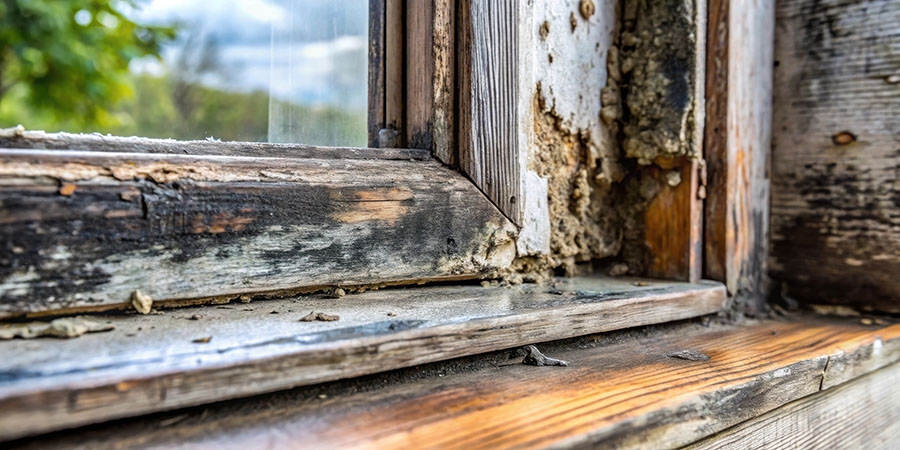
Rot triage: when wood is repairable vs not
Rot is less a “wood problem” than a water problem with a wood symptom. The best rot repair starts with the question: Why is this staying wet?
First: identify the moisture source
Common culprits:
- Failed paint film + failed putty = water held against the sash
- No drip edge / poor sill geometry
- Failed exterior joints at casing/siding
- Gutters dumping water onto trim
- Interior condensation from high humidity + cold surfaces (sometimes worsened by tight interior storms without humidity control)
Repairing wood without fixing moisture is just donating money to fungus.
The “poke test” (and what it actually tells you)
Use a small awl or pick:
- Surface softness with solid wood underneath → often repairable (consolidation/dutchman/epoxy, depending on philosophy and exposure)
- Deep punky wood, crumbling fibers, lost shape → may require piecing-in larger sections or partial replacement
- Rot at critical joints (meeting rails, muntin intersections) → evaluate structural integrity carefully
NPS emphasizes evaluating physical condition and planning repairs—especially at vulnerable joints—before deciding on replacement.
Repairable rot (typical)
- Bottom rail corners where water sat due to putty gaps
- Localized sill edge deterioration
- Small areas around glazing rabbets
Appropriate repairs might include:
- Removing decayed wood back to sound material
- Splicing in new wood (“dutchman” repair) where profiles matter
- Using compatible consolidants/fillers where appropriate for the exposure
(Exact methods depend on conditions; when profiles are complex or decay is structural, a craftsperson is worth it.)
Not-so-repairable rot (typical)
- Widespread decay through the sash thickness across many members
- Frame/sill rot that compromises how the window is anchored
- Repeated failures due to chronic water intrusion you can’t control (rare, but real)
In these cases, replacement in kind (matching profiles and operation) may be the responsible move—especially if you can preserve trim, casing, and overall appearance.
Prefer to get professional help?
Find and compare pros on Angi
Compare quotes from top-rated Handyman ServicesDisclosure: I may earn a commission if you request service through these links. It doesn’t affect your quote.
MORE INFO:
https://oldhomerestorationguide.com/how-to-diagnose-drafts-where-old-windows-really-leak/
References: NPS Preservation Brief 9