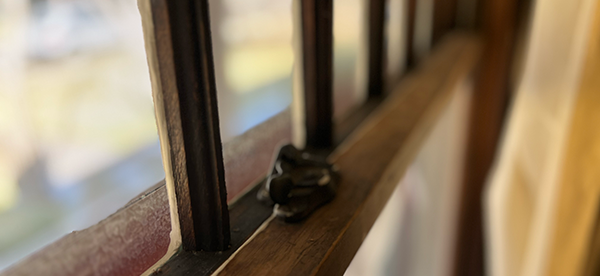
Repair vs Replace: A 5-step decision framework for original windows.
Original wood windows aren’t just “old windows.” They’re a system: sash + glass + glazing + frame + interior trim + exterior casing + paint film + weatherstripping + (often) storm window. When they’re underperforming, the question isn’t “Are they bad?” It’s “Which parts of the system are failing—and what’s the smartest fix for this house?”
National Park Service guidance generally prioritizes retaining and repairing historic windows when feasible, replacing in kind only when truly necessary.
Step 1: Define the real problem (comfort, maintenance, safety, or all three?)
Most homeowners say “energy efficiency” but mean one (or more) of these:
- Drafts (air leakage) → feels cold, curtains move, whistling
- Condensation / moisture damage → peeling paint, rot, moldy odors
- Operation issues → painted shut, cords snapped, sash won’t stay up
- Water intrusion → staining at stool/trim, wet plaster, recurring paint failure
- Safety / health → lead paint dust risk, egress needs, broken glass
If you can name the failure mode, you can choose the least invasive fix that actually works.
Step 2: Do a quick “repairability” triage
Repair is usually the default if you have:
- Sound wood in most of the sash and frame
- Joinery that’s loose but not disintegrated
- Glazing that’s mostly intact or patch-repairable
- Problems that point to maintenance (paint, putty, cords, weatherstripping)
Replacement starts to make sense when you have:
- Extensive rot through critical sections (meeting rail, muntins, sill) across many windows
- Frames that are structurally failing or badly out of square throughout
- A prior “remuddle” that removed key parts, leaving little to restore
- A real constraint (e.g., code-required egress or safety glazing) that can’t be met another way
NPS’s window repair guidance emphasizes evaluating condition first and repairing where possible.
Step 3: Compare the right options (retrofit vs full replacement)
A fair comparison is not “leaky single-pane vs brand-new unit.” It’s:
Repair + air sealing + storms
- Strip/repair sash, re-glaze as needed, tune operation
- Add durable weatherstripping
- Add quality storm windows (interior or exterior; ideally low-e)
DOE notes modern low-e storm windows (interior or exterior) can deliver energy savings similar to full replacement at about one-third the cost, while reducing drafts and improving comfort.
The National Trust’s Preservation Green Lab study similarly found that retrofit measures can compete well on performance and often win on cost/return compared with replacement.
Step 4: Use a simple scoring rubric
Window Repair vs. Replace Scoring Tool
Score each category from 0 to 3. Lower scores indicate more urgent problems.
Step 5: Avoid the two most common decision traps
- Replacing windows to solve a moisture problem. If bulk water is hitting the assembly (bad flashing, failed caulk joints, no drip edge, gutter issues), new windows can rot too.
- Chasing ROI with payback math alone. Comfort and durability matter. Also: replacement “efficiency” depends heavily on install quality.
- References: NPS Preservation Brief 9 ; DOE Storm Windows ; National Trust/Preservation Green Lab “Saving Windows, Saving Money”