Weatherstripping options compared (spring bronze, foam, etc.)
Weatherstripping is where historic windows quietly become “modern-comfort” windows—without losing their proportions, glass, or joinery.
What good weatherstripping must do
- Seal predictable gaps (without adding so much friction the window won’t move)
- Last through seasonal movement
- Play nicely with old wood, old paint, and occasional repairs
Where weatherstripping belongs (and where it doesn’t)
- Jambs: spring bronze, interlocks, or appropriate seals are usually best
- Meeting rail: a well-aligned lock + a thin seal can be transformative
- Sash bottom: needs a durable solution that won’t scrape off immediately
- Do not rely on weatherstripping to solve water intrusion or rot—that’s a moisture-management problem first.
Choosing the “right” system
- If you’re doing a full restoration, pick a durable, repairable system (spring bronze/interlocks).
- If you’re doing a comfort retrofit, prioritize the biggest leakage points first (meeting rail + jambs) and avoid anything that makes windows hard to operate.
Four Locations to Seal
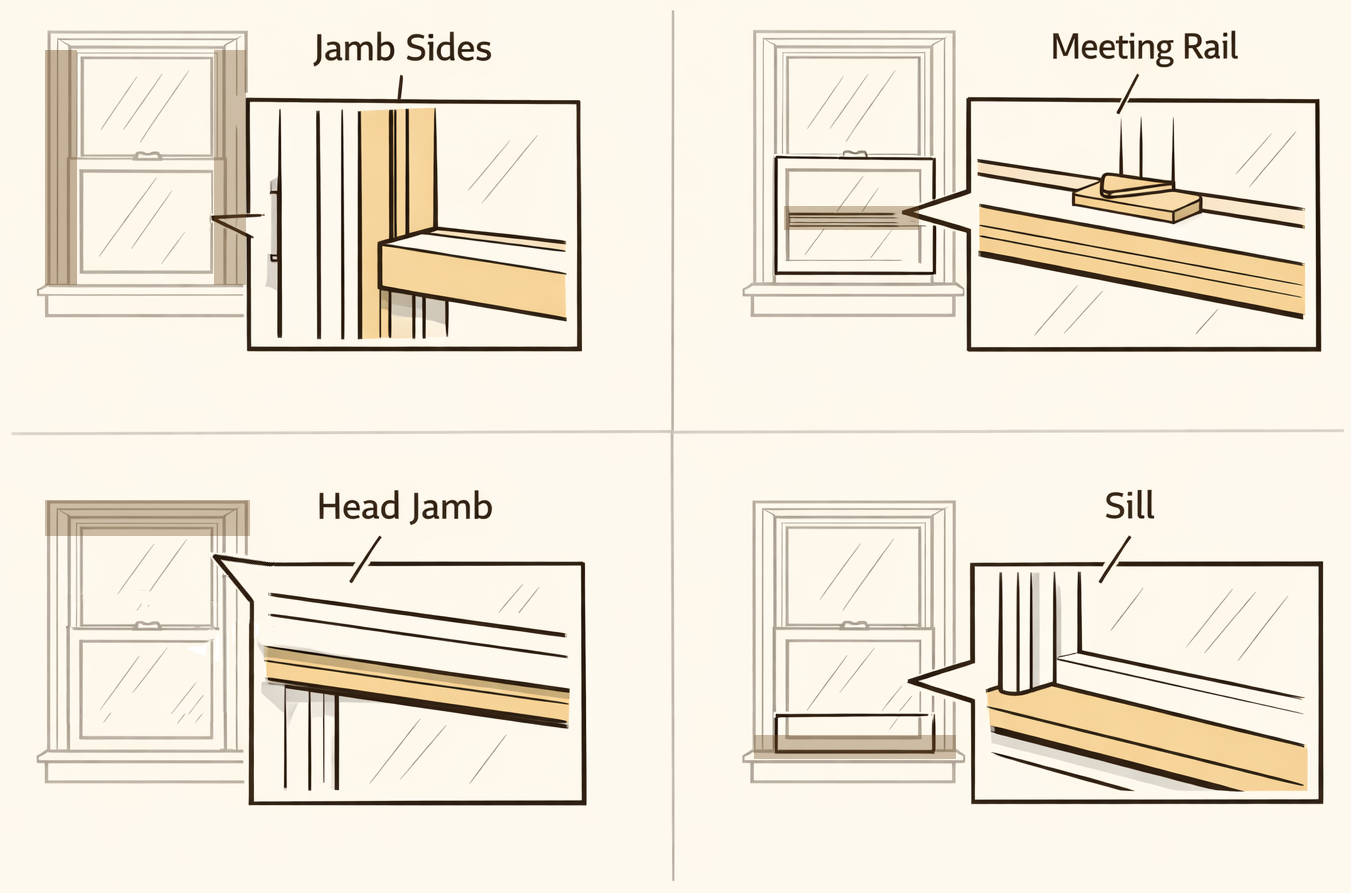
1. Jamb Sides
Weatherstripping is installed either on the sash or on the frame.
Options
• Brush pile
• Spring bronze
• One-piece interlocking bronze
2. Head jamb
Weatherstripping is installed either on the sash or on the frame.
Options applied to window sash
• Silicone bulb
• Brush pile
Options applied to frame
• Spring bronze
• One-piece interlocking bronze
3. Meeting Rail
Weatherstripping is applied to the exterior side of the lower sash only (not visible when window is open), or to both halves (visible on bottom edge of upper sash when lower sash is open).
Options
• Two-piece interlocking bronze
• Silicone bulb applied to lower sash only
• Brush pile applied to lower sash only
4. Sill
Weatherstripping is installed either on the sash or on the sill.
Options
• Spring Bronze
• Silicone bulb
• One-piece interlocking bronze
Information from: https://www.finehomebuilding.com/2025/08/20/window-weatherstripping
Find the right weatherstrip for each window section
Answer a few questions to get a practical, old-house-friendly recommendation. (Assumes wood double-hung windows.)
WANT TO HIRE THIS OUT?
“If you’d rather have a pro handle weatherstripping and draft sealing, you can request service through Angi and compare responses.”
Hire this out?
If you’d rather have a pro handle weatherstripping and draft sealing, you can request service through Angi and compare responses.
Disclosure: I may earn a commission if you request service through these links. It doesn’t affect your quote.
For the DIYers:
Learn more about the popular types of weatherstripping (and where each shines)
Spring bronze (a classic for a reason)
Best for: jamb channels on double-hungs; long-term durability
Pros: durable, repairable, historically appropriate; handles small gap variation
Cons: needs careful, straight installation; can kink if rushed
Spring bronze is widely used in historic restoration circles because it seals while still allowing smooth operation when installed correctly.
A quick video showing the basic process on a door. Plenty of other good, detailed videos on YouTube.
Pemko – P51B17 Spring Bronze Weatherstrip, 1.125″ W x 17′ L- For use on wood doors and wood casement windows
Interlocking metal weatherstrip (integrated system)
Best for: comprehensive restorations where sash edges can be milled
Pros: excellent performance, tidy appearance
Cons: more specialized labor; harder to retrofit without shop work
A great step-by-step video on replacing metal weatherstripping. (Makes it look easy)
Here’s a video specifically about interlocking metal weatherstripping. Note: I see this style being used usually on doors.
Compression bulb / silicone gaskets
Best for: meeting rails, stops, and some casements (recommend lower sash only)
Pros: very good seal; consistent compression
Cons: can look “new” if not detailed well; must avoid creating binding
V-strip (metal or vinyl)
Best for: channels and sliding interfaces with consistent gaps
Pros: affordable, decent performance
Cons: shorter lifespan for vinyl; can deform with paint buildup
BBTO Weather Stripping Door Seal Exterior Weather Strip – various sizes and colors.
Foam tape (the quick fix—sometimes acceptable, often temporary)
Best for: short-term stopgaps, rental triage, emergency comfort
Pros: easy, cheap
Cons: short lifespan, adhesive failure, can jam sashes and tear paint
Seal Foam Tape – Closed cell tape, weatherproof, shock-absorbing, sound insulation.
Felt / wool pile
Best for: certain tracks, some historic details, and low-friction needs
Pros: smooth operation; traditional look
Cons: not the highest performer for big pressure differences
TORRAMI Felt Pile Weather Stripping Brush Strip for Window and Door Seal – Multiple widths, thicknesses and colors